What Is Benedict’s Law?
Benedict’s Law – formally part of the Children’s Wellbeing and Schools Act 2026 – is a landmark piece of legislation introducing mandatory national protections in England designed to improve allergy safety and prevent anaphylaxis in educational settings.
The law is named in memory of Benedict Blythe, a five-year-old boy who tragically died from a fatal allergic reaction to milk whilst at school in 2021. His family, through the Benedict Blythe Foundation, campaigned tirelessly alongside allergy charities to secure these life-saving protections in law.
The legislation passed in 2026 and the Government has confirmed that new statutory guidance is expected to come into force in England from September 2026 making this one of the most significant developments in school First Aid and safeguarding in a generation.
Why This Matters: The Allergy Problem in UK Schools
Allergies and anaphylaxis pose a very real and growing risk in schools. The scale of the problem in the UK is significant:
| Statistic | Figure | Source |
|---|---|---|
| Children in the UK with a food allergy | Approximately 1 in 13 | Anaphylaxis UK |
| Adrenaline auto-injectors prescribed to under-17s | Over 150,000 | NHS England |
| Anaphylaxis hospital admissions per year (UK) | ~20,000 | Allergy UK |
| Proportion of severe reactions occurring away from home | Over 50% | BSACI |
| Schools with a formal allergy policy (pre-2026) | Fewer than 1 in 3 | NARF estimate |
Schools are one of the highest-risk settings for a first allergic reaction, often occurring before a formal diagnosis has been made.
Without proper training, staff may not recognise the signs of anaphylaxis or know how to respond in the critical window before emergency services arrive.

The Four Core Requirements of Benedict’s Law
The Children’s Wellbeing and Schools Act 2026 (Part 2 Allergy Safety) places four primary obligations on schools in England:
1. Whole-School Allergy Policy
Every school must develop, publish, and maintain a dedicated allergy policy. This policy must set out clearly how the school identifies, manages, and responds to allergy-related risks across the whole school environment including classrooms, dining halls, sports days, and school trips.
2. Mandatory Staff Training
Comprehensive anaphylaxis and allergy awareness training is required for all school staff and not just designated First Aiders.
This includes teachers, teaching assistants, lunchtime supervisors, administrative staff, caretakers, and any other adult regularly working on school premises.
The draft statutory guidance indicates training should cover:
- Recognising the signs of an allergic reaction and anaphylaxis
- Responding appropriately in an emergency
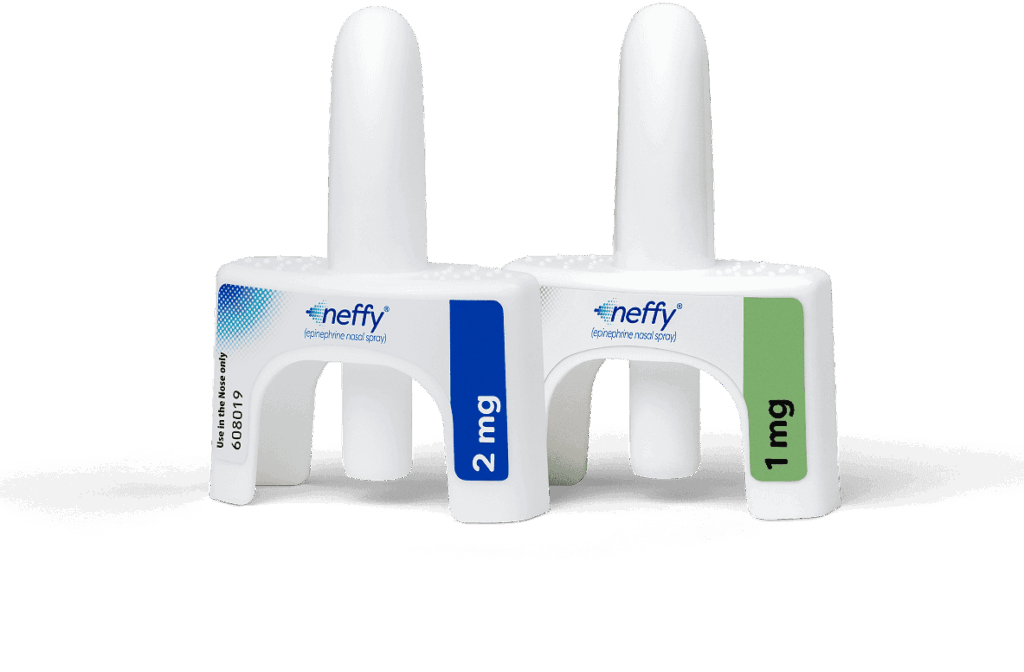
- Understanding how and when to use adrenaline auto-injectors (AAIs), such as EpiPen, Jext, and EURneffy.
Our training covers the correct use of all three MHRA-approved adrenaline devices including EURneffy, the recently approved needle-free nasal spray alternative, suitable for adults and children weighing 30kg or more.
This is particularly significant for schools, as it provides a less invasive option in an emergency.
3. Spare Emergency Adrenaline Auto-Injectors (AAIs)
Schools are legally required to stock spare adrenaline auto-injectors on-site. Crucially, these spare devices may be administered to any child or adult experiencing anaphylaxis in an emergency even if they do not have their own prescribed device.
This provision is significant because it mirrors the legislation that was introduced for schools to hold spare salbutamol inhalers, and is designed to ensure no child dies because a device was unavailable or left at home.
4. Individual Healthcare Plans (IHPs) for All Allergic Pupils
Schools must create and maintain specific, up-to-date Individual Healthcare Plans for every pupil with a diagnosed allergy. These plans must detail the pupil’s known allergens, symptoms, prescribed medication, and the emergency action plan to be followed.

What We Know And What We’re Still Waiting For
The Department for Education ran a public consultation on updated statutory guidance for supporting children and young people with medical conditions and allergies.
The consultation closed on 15th May 2026 and the DfE is currently analysing responses.
Here is a clear summary of where things stand:
| Area | Status |
|---|---|
| Legal framework (Children’s Wellbeing and Schools Act 2026) | ✅ Confirmed and now in law |
| Whole-school allergy policy requirement | ✅ Confirmed |
| Mandatory staff allergy and anaphylaxis training | ✅ Confirmed in draft guidance |
| Spare AAIs on school premises | ✅ Confirmed |
| Individual Healthcare Plans for allergic pupils | ✅ Confirmed |
| Final statutory guidance published | ❌ Not yet published |
| Exact training content / qualification requirements | ❌ Not yet confirmed |
| Frequency of required training | ❌ Not yet confirmed |
| Whether a specific accredited course will be required | ❌ Not yet confirmed |
| Expected enforcement date | ⏳ September 2026 (anticipated) |
A Whole-School Approach: Not Just First Aiders
One of the most important aspects of Benedict’s Law is the emphasis on a whole-school approach to allergy safety.
Unlike traditional First Aid requirements which often focus solely on a small number of designated First Aiders, the new guidance makes clear that every member of staff should have awareness and confidence to act.
This represents a significant shift in thinking.
An anaphylactic reaction can happen anywhere, at any time, and to any child including those not yet diagnosed. A school cannot rely on one or two trained staff members being available in every situation.
Every adult in a school setting needs to know what to recognise and what to do.

How Lightning Training Solutions Can Help Your School
At Lightning Training Solutions, we offer practical, accredited training that gives school staff the knowledge and confidence to respond effectively in a First Aid emergency which includes allergic reactions and anaphylaxis.
Emergency First Aid at Work (EFAW)
Our one-day EFAW course is ideal for teaching assistants, lunchtime supervisors, administrative staff, and other support staff who need a solid grounding in First Aid without the commitment of a full three-day qualification.
Fully regulated and RQF accredited, it gives staff the practical skills and confidence to respond calmly and effectively in a First Aid emergency.
The course covers:
- Recognising and responding to an unresponsive casualty
- CPR and use of an AED defibrillator
- Recognising anaphylaxis and administering an adrenaline auto-injector
- Managing shock, bleeding, and wounds
- Choking and airway management
- Seizures and other medical emergencies
Certificates are valid for three years. This course is an excellent foundation for any school support staff member and contributes to your school’s whole-school approach to First Aid and allergy safety/
First Aid at Work (FAW)
Our three-day FAW course is the gold standard in workplace First Aid and is the recommended course for designated school First Aiders, site managers, and those taking a lead role in health and safety.
Fully RQF accredited and Ofqual regulated, it provides in-depth, practical First Aid training delivered in a supportive and engaging environment.
The course covers everything in the EFAW, plus:
- In-depth anaphylaxis management and use of adrenaline auto-injectors
- Fractures, dislocations, and soft tissue injuries
- Burns and scalds
- Chest injuries and breathing difficulties
- Stroke and seizure response
- Diabetes, asthma, and other medical conditions in the workplace
- Spinal injury awareness and safe management
- Minor injuries and ongoing casualty care
Certificates are valid for three years.
This qualification not only meets your legal obligations under the Health and Safety (First Aid) Regulations 1981, but gives your lead First Aider the depth of knowledge to manage a wide range of emergencies including serious allergic reactions.
Paediatric First Aid
Our Paediatric First Aid course is specifically designed for anyone working with babies and children, and is essential for early years settings, primary schools, childminders, nurseries, and after-school clubs. It is an Ofqual-regulated, RQF accredited qualification that meets the requirements of Ofsted and the Early Years Foundation Stage (EYFS) framework.
Unlike a standard adult First Aid course, Paediatric First Aid focuses entirely on the unique needs of infants and children because the techniques, doses, and responses differ significantly from those used with adults.
Staff leave feeling genuinely confident, not just ticking a box.
Our course covers:
- Paediatric CPR and use of an AED on children and infants
- Recognising and responding to anaphylaxis in a child or baby
- Correct administration of adrenaline auto-injectors in a paediatric emergency
- Choking in babies, toddlers, and older children
- Febrile seizures and epilepsy in children
- Meningitis – recognising the signs in young children
- Burns, scalds, and wound management in children
- Fractures and head injuries in children
- Managing an unresponsive child or baby
- The recovery position for infants and children
Certificates are valid for three years. With Benedict’s Law placing a whole-school responsibility on all staff – including early years practitioners – this course has never been more relevant or more important.
Standalone Anaphylaxis Training
In addition to our First Aid courses, we currently offer anaphylaxis awareness training as a standalone module which is ideal for schools and settings that want to address allergy safety ahead of the formal guidance being published.
Once the statutory guidance has been confirmed, we will develop and adapt this module to fully meet and exceed the requirements set out by the Department for Education.
What is EURneffy?
EURneffy is an MHRA-approved adrenaline (epinephrine) nasal spray for the emergency treatment of anaphylaxis.
Unlike traditional auto-injectors such as the EpiPen and Jext pen, EURneffy is needle-free and is intended for use in adults and children weighing 30kg or more. Our training covers all three devices, ensuring your staff are confident whichever device is available in an emergency.
Did you know?
We run a regular schedule of openc courses which are held at The Masonic Hall, 23 Hendford, Yeovil, BA20 1TQ between 9:15am and 4:15pm.
You can find our latest courses below:
Get Ahead Before September 2026
Schools that act now, and before the final statutory guidance is published, will be in the strongest possible position when requirements formally come into force.
There are practical steps you can take today:
- Audit your current allergy policy does one exist, and is it up to date?
- Identify staff who need training remember, it’s a whole-school requirement
- Check your AAI stock are spare devices available and in date?
- Review your Individual Healthcare Plans are they current for all allergic pupils?
- Book First Aid training act now and make sure our staff are trained, confident, and qualified
Useful Resources
- GOV.UK – Stronger Protections for Children with Allergies in School
- Anaphylaxis UK – Benedict’s Law Guidance
- Benedict Blythe Foundation
- National Allergy Research Foundation – Benedict’s Law
- Children’s Wellbeing and Schools Act 2026 – Part 2: Allergy Safety
- DfE Consultation – Supporting Pupils with Medical Conditions
Book Training for Your School
To find out about our next available dates or to discuss bespoke in-school training, get in touch with our team:
📞 01935 473575 | 07910 407443
📧 bookings@lightningtrainingsolutions.co.uk